
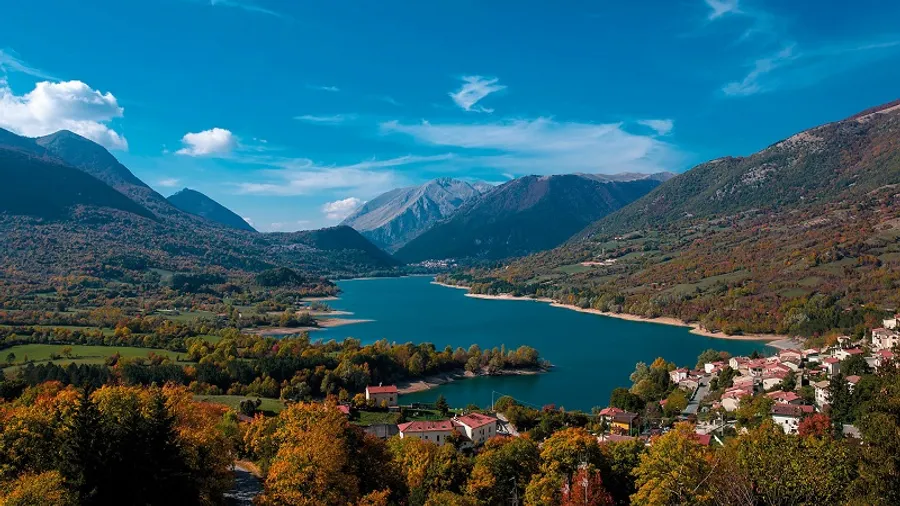
Molise is one of Italy’s best-kept summer secrets. While the coasts further north fill up with crowds, this small region between the Apennines and the Adriatic stays refreshingly quiet — and refreshingly cool. Within an hour of Isernia you’ll find a glacial-blue mountain lake, hidden waterfalls, ancient beech forests protected by UNESCO, ruins of Samnite theatres, and sandy beaches. Here’s how to spend a summer week using Isernia as your base.
In this guide:
- Lago di Castel San Vincenzo: swimming and watersports in the Mainarde mountains
- Le Cascate di Carpinone: waterfalls and natural pools in the woods
- Sorgenti del Volturno: the source of one of southern Italy’s great rivers
- Ancient forests of the Alto Molise: the Collemeluccio-Montedimezzo Biosphere Reserve
- Pesche: the “village on the rocks”
- Pietrabbondante: Samnite ruins and summer theatre
- Day trip to the sea: how far is the beach?
Lago di Castel San Vincenzo: swimming and watersports in the Mainarde mountains
Lake Castel San Vincenzo is the star of Molise’s summer season. This turquoise artificial lake sits at around 1,000 m in the Mainarde mountains, right on the edge of the Abruzzo, Lazio and Molise National Park (PNALM) — and the water temperature, even in August, stays pleasantly cool.
What to do at the lake
- Swimming and sunbathing on the small grassy and pebble beaches around the shore
- Pedal boats (pedalò), canoes and SUP rental at the lakeside kiosks in summer
- Fishing — the lake is stocked and popular with anglers
- Lakeside picnics under the trees, with several bars and restaurants serving grilled meat, arrosticini and cold drinks right on the water
- Walking and cycling along the shoreline path, with views across to the surrounding peaks
Hike up for the view
The lake is also a great starting point for hikes into the Mainarde. Marked trails climb towards Monte Marrone (1,805 m) — a panoramic ridge with WWII history, where Italian Alpini troops fought in the winter of 1943–44 — and, for more experienced walkers, towards the higher Monte Meta (2,242 m), the highest peak of the range. Both reward you with sweeping views down over the lake and across to Abruzzo and Lazio.
Nearby: the Abbey of San Vincenzo al Volturno
Just a few minutes from the lake, the Abbey of San Vincenzo al Volturno is one of Italy’s most important early medieval monastic sites. Founded in the 8th century, it was once one of the largest Benedictine abbeys in Europe. Today you can visit the archaeological area and the underground Crypt of Epiphanius, with Carolingian frescoes dating back over 1,200 years — a striking contrast to an afternoon of swimming.
Distance from Isernia: about 30 km, roughly 35–40 minutes by car.
Le Cascate di Carpinone: waterfalls and natural pools in the woods
A short drive from Isernia, the village of Carpinone hides one of the area’s most rewarding summer walks. The Cascate di Carpinone are a series of small waterfalls and natural pools formed by the Rio Vesalo as it cuts through a green, shaded gorge below the village.
Why visit
- An easy, family-friendly trail following the stream through woodland, with several waterfalls and clear pools along the way — perfect for cooling off on a hot afternoon
- The cool microclimate of the gorge makes it one of the most pleasant spots in the area in July and August
- Carpinone’s railway station is a stop on the historic Transiberiana d’Italia, so you can combine the waterfalls with a ride on the heritage train when it runs in summer
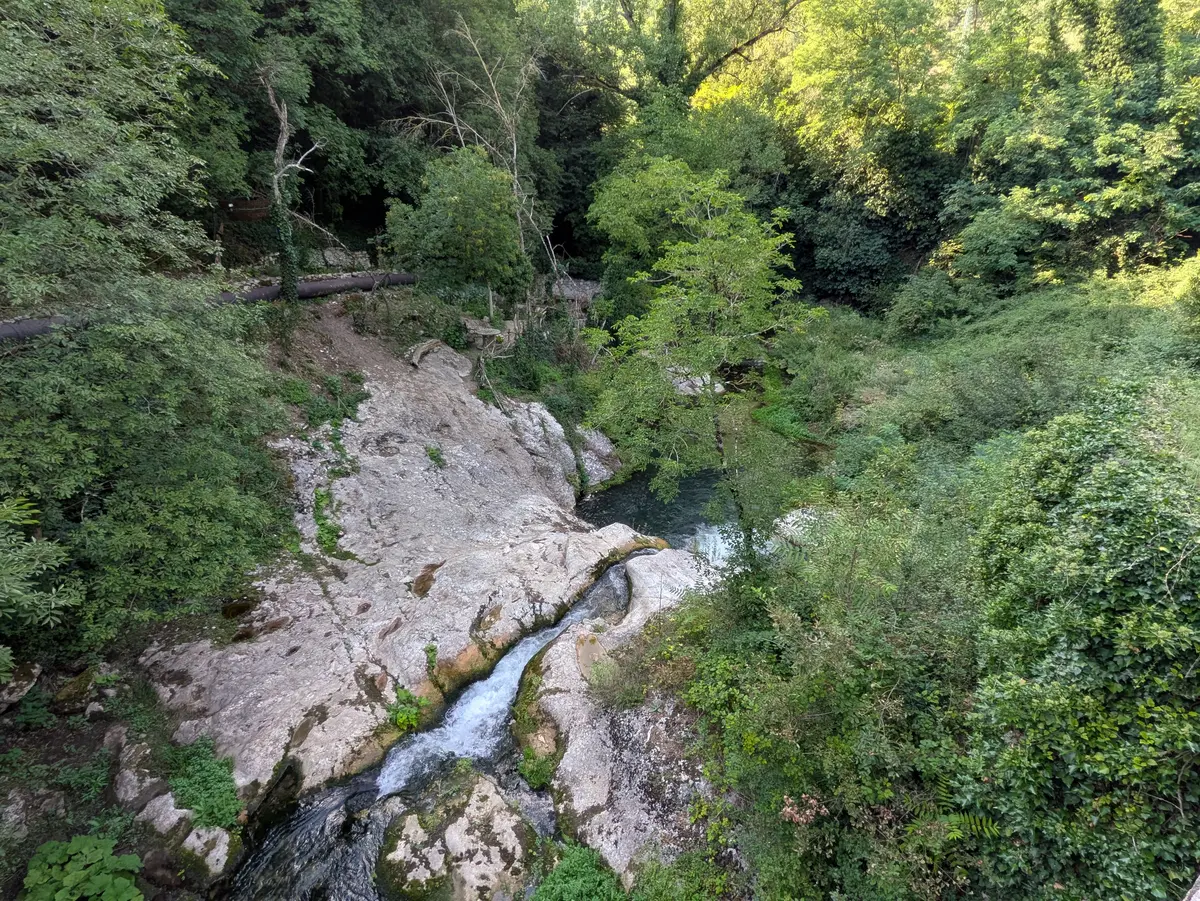
Distance from Isernia: about 13 km, roughly 15–20 minutes by car.
Sorgenti del Volturno: the source of one of southern Italy’s great rivers
In the village of Rocchetta a Volturno, the Sorgenti del Volturno mark the point where the Volturno river — the longest in southern Italy — emerges from the rock in a series of crystal-clear springs. The site is set in a small park with shaded picnic areas, footbridges over the spring-fed pools, and the constant sound of running water. It’s an easy, flat walk and one of the coolest spots around on a summer day, with the water staying at a near-constant temperature year-round.
Rafting on the Volturno
A few kilometres downstream, in Colli a Volturno, Molise Rafting runs guided rafting and packrafting trips on the Volturno’s clear, spring-fed waters. The “Rafting Classic” descent is an easy, fun 4 km route suitable for families and first-timers, with a riverside base offering a beach area, hammocks and a bar to relax afterwards — a great way to spend a summer morning on the water.
Distance from Isernia: about 20 km, roughly 25–30 minutes by car.
Ancient forests of the Alto Molise: the Collemeluccio-Montedimezzo Biosphere Reserve
For something completely different, head into the Collemeluccio-Montedimezzo Alto Molise Biosphere Reserve, part of UNESCO’s “Man and the Biosphere” network. These two forest reserves protect some of Italy’s oldest stands of beech, oak, fir and maple — some trees are centuries old and were never commercially logged.
- Marked hiking trails of varying difficulty wind through the forest, with shade guaranteed even on the hottest days
- Visitor centres run guided nature walks in summer, often suitable for families
- Look out for deer, roe deer and birds of prey — and, later in the season, an excellent spot for wild mushroom foraging (with a permit)
Distance from Isernia: 30–45 minutes by car depending on the access point.
Pesche: the “village on the rocks”
Just a few minutes from Isernia, the village of Pesche is built directly into and around enormous limestone boulders that tumbled from the mountainside centuries ago — houses, stairways and alleys weave between the rocks in a genuinely unusual townscape. It’s a lovely spot for an evening passeggiata when the heat of the day has passed, with panoramic views back over Isernia and the valley.
Hike to Fonte Majuri
From the upper part of the village, a well-marked trail (part of the Sentiero Italia network) climbs through the Riserva Naturale di Pesche, a narrow path partly cut into the rock and flanked by gorse and holm oaks, to the 17th-century Fonte Majuri spring and forest refuge at 925 m. It’s a proper morning hike — around 50 minutes from upper Pesche — and a refreshing way to escape the summer heat under the tree cover.
Distance from Isernia: about 5 km, roughly 10 minutes by car.
Pietrabbondante: Samnite ruins and summer theatre
High in the hills of Alto Molise, Pietrabbondante is home to one of the most important Samnite archaeological sites in Italy: a 2nd-century BC theatre-temple complex with sweeping views over the surrounding mountains. In July and August, the ancient theatre often comes back to life with the Pietrabbondante summer theatre festival, staging classical drama and concerts in a genuinely spectacular open-air setting — check local listings for the current year’s programme.
Distance from Isernia: about 45 km, roughly 50 minutes by car.
Day trip to the sea: how far is the beach?
If you want a proper beach day, the Adriatic coast at Termoli is about 1 hour 15 minutes from Isernia. Termoli combines a sandy, gently sloping beach with a charming Borgo Antico — a fortified old town on a promontory, with a Swabian castle and a 12th-century cathedral. From the port, ferries run in summer to the Tremiti Islands, a small archipelago with some of the clearest water in the Adriatic, ideal for a full-day boat excursion.
The closer option: San Salvo Marina and Vasto
If you’d rather shave off some driving time, San Salvo Marina and Vasto are actually the closest stretches of coast to Isernia — around 1 hour by car, just over the border in Abruzzo. Vasto has its own attractive hilltop old town overlooking the sea, and the coastline here is part of the scenic Costa dei Trabocchi, dotted with the historic wooden fishing platforms (trabocchi) typical of the area.
If you’ve read this far, here are two genuine hidden gems for this stretch of coast: the quiet Spiaggia di San Nicola in Vasto, and the Riserva Naturale di Punta Aderci just north of it — a protected headland with unspoilt beaches, dunes and walking trails, and some of the best sunset views on the whole Adriatic coast.
Practical tips for a summer stay near Isernia
Beat the heat the local way
Isernia sits at around 420 m above sea level, so summer evenings are noticeably cooler than on the coast or in Rome and Naples. Plan active outings — hiking, the waterfalls, the lake — for the morning, then retreat for a long lunch and siesta during the hottest hours, as locals do.
What to pack
- Swimwear and a quick-dry towel for the lake and waterfalls
- Water shoes or old trainers for walking on the riverbed near the Cascate di Carpinone
- Comfortable hiking shoes for the forest reserves and Pietrabbondante
- A light layer for the evening — even in August, mountain villages cool down noticeably after sunset
Sagre and summer festivals
Throughout July and August, villages across Molise hold sagre — local food festivals celebrating a single dish or product, from pallotte cacio e ova to ventricina and grilled lamb. These are some of the best (and cheapest) ways to eat well and meet locals; ask us for the latest dates when you arrive, as they’re often announced only a few weeks in advance.
Using Isernia as your summer base
Our Casa Vacanze in Isernia puts you within easy reach of everything in this guide:
- 30–40 minutes to Lake Castel San Vincenzo and the Mainarde mountains
- 15–20 minutes to the Carpinone waterfalls
- 10 minutes to Pesche and its panoramic walks
- About an hour to the Adriatic coast at Termoli
- A panoramic terrace and generous breakfast to start each day before the heat sets in
Check availability and book your summer stay →
Frequently asked questions
Is Lake Castel San Vincenzo good for swimming with children? Yes — the shoreline has several gently sloping grassy and pebble areas suitable for families, plus pedal boat and canoe hire for older kids. The mountain water is cooler than the sea, which is welcome on hot days.
Are the Carpinone waterfalls a difficult hike? No, the main trail along the stream is short and manageable for most fitness levels, though water shoes help on the wetter sections near the pools.
How far is the sea from Isernia? The closest coast — San Salvo Marina and Vasto, in Abruzzo — is about 1 hour by car. Termoli, on the Molise coast, is about 1 hour 15 minutes, with the option to extend the trip with a ferry to the Tremiti Islands. Both make for an easy day trip.
What’s the best time of year for hiking in Molise? Late spring (May–June) and early autumn (September) offer the most comfortable temperatures, but the forest reserves and mountain lake stay pleasant throughout summer thanks to the altitude and shade.
Do I need a car to visit these places? Yes, a car is strongly recommended. None of these destinations are well served by public transport, but all are within a comfortable hour’s drive of Isernia, making it easy to combine several in one trip.
From mountain lakes to ancient forests, Molise’s summer is made for slow exploration. Book your stay in Isernia →